It is amazing how you can pass by something without ever noticing it, even in your own neighborhood. A few years ago, while I was training for a marathon, one of my favorite parts about the long runs was noticing new sites around the city that I previously had paid no mind to. For example, I had never noticed the 1767 Milestones located around Boston until I spotted the one on Huntington Ave on a run. After that, I started seeing them around the area on many of my runs. It was amazing to me how these not-so-hidden relics of the past were able to blend in to modern city life.
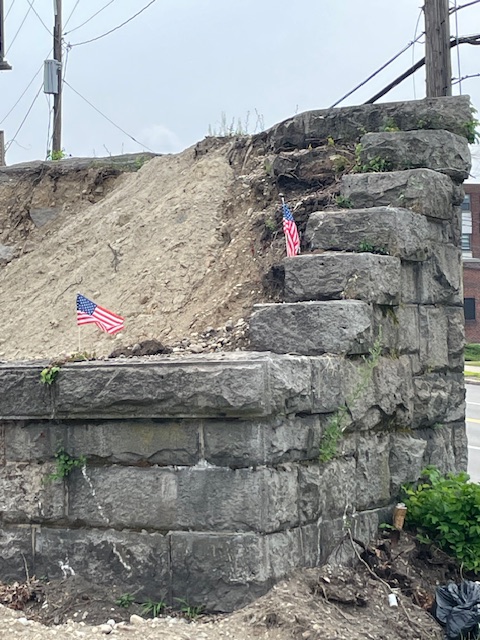
More recently, I had an even larger historic relic emerge in my neighborhood that had been hidden in plain sight. On Spring Street in West Roxbury, about ¾ of a mile from my house, there was a large stone wall that was overgrown with vegetation. I had been driving past this spot many times over the past two decades, even before I lived in the neighborhood. My brother went to Catholic Memorial right around the corner, so I was in the neighborhood daily during my high school years, and even after would often pass through there going in and out of the city via Centre St. I had never given much though to it, until after I moved to the neighborhood and I had the idea that it might have been more than just a wall; it actually looked like it may have been the abutment a train bridge. This prompted some online sleuthing, and discovering that it was along the right of way of the former Commuter Rail Dedham Branch, which was shut down in the 1960s, not long after the MBTA took over operations of the rail network. There was also a day when I pulled into the Star Market parking lot across the street with a GPS app active on my phone (not something that happens often) and the GPS said “driving on abandoned railroad bed” which was more evidence to me that there had at one point been a railroad bridge there.

Last winter, my interest in the site grew when the vegetation along the abutment got cleared. Walking by in February 2024 after the overgrowth was removed, I noticed that in the middle of the abutment, there was a staircase! It had not been visible before because there were literally trees growing in the middle of it. I took some pictures of the site to do further online sleuthing when I got home. This led to my discovery that it was not just the remains of a bridge, but actually the remnants of an old station! Spring Street Station appears to have opened in the 1880s and closed in the 1930s. About a month after my discovery, Universal Hub had an article that confirmed what I had found and contained some additional details.


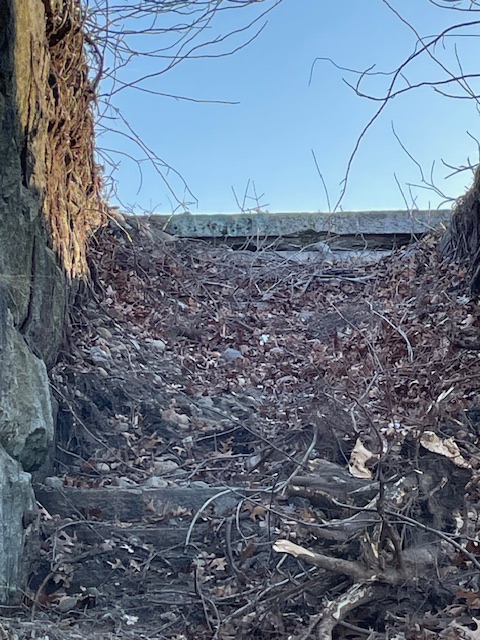
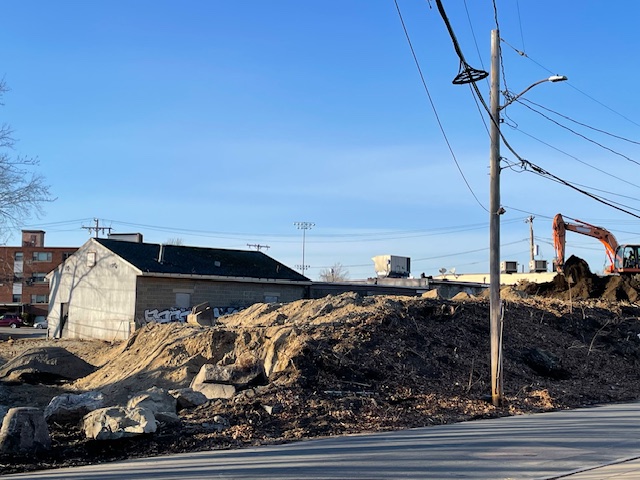
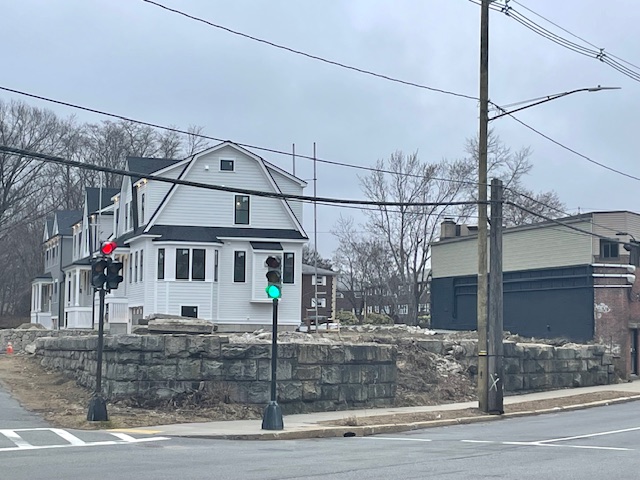
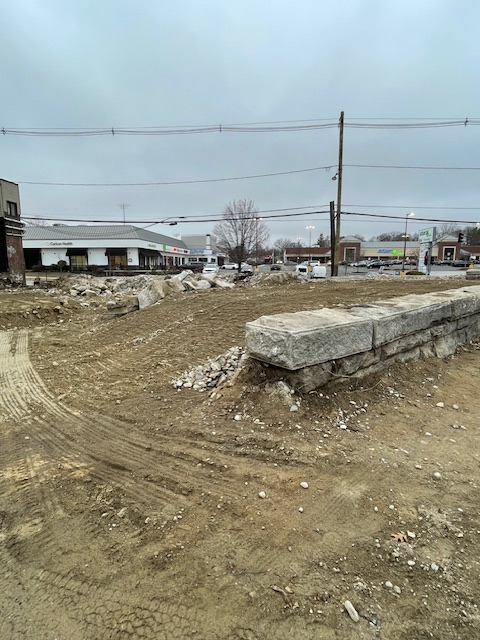
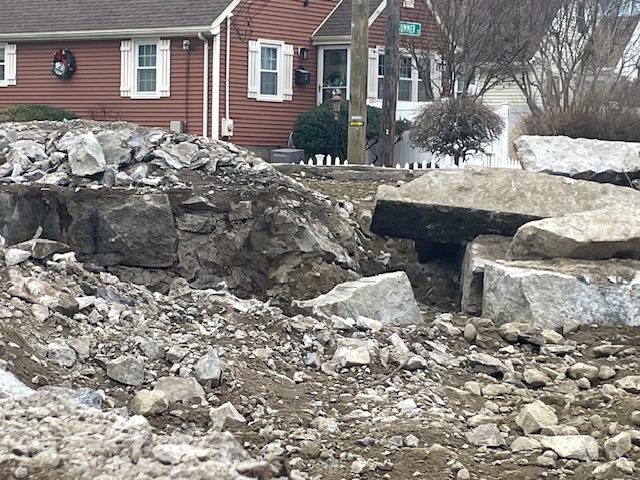
The vegetation around the abutment was cleared to make room for four new single-family houses. Over the past year, I have been watching as different parts of the site were cleared, and houses began to rise. Last week, a commercial building abutting the site was demolished to clear more space. Now, three of the four houses are at least to the point of being framed, and construction is at the point where the giant stones from the ruins of the station are being removed and broken into smaller pieces to be hauled away from the site. It is the last impediment to the fourth house being built on the site.

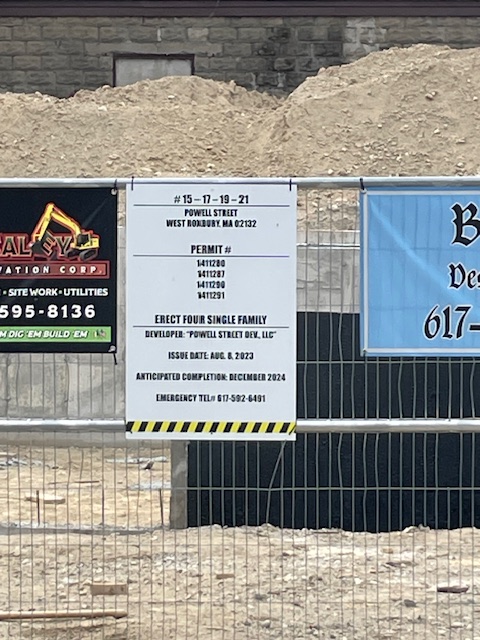
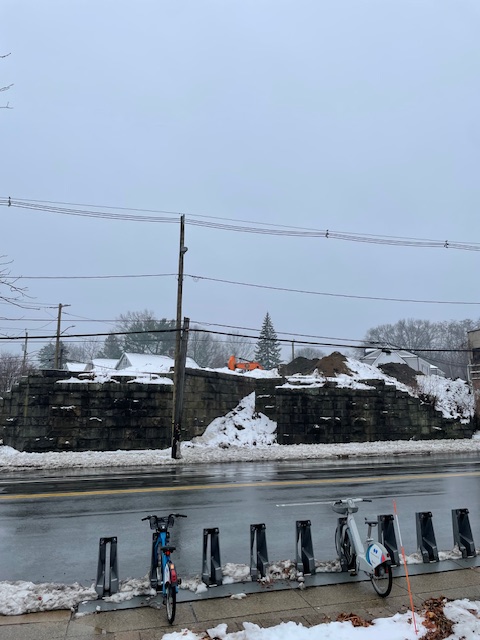
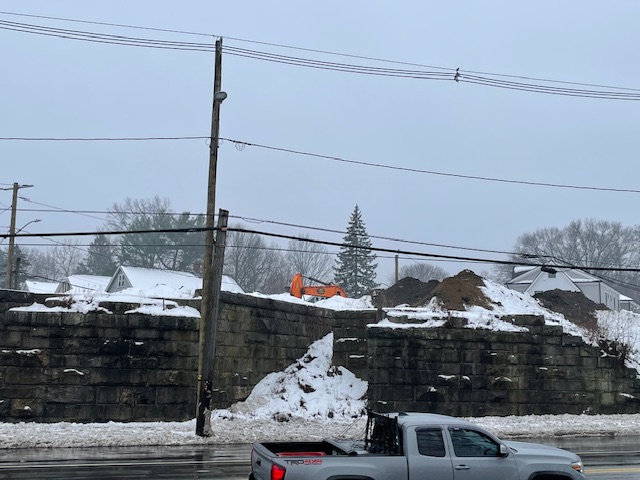
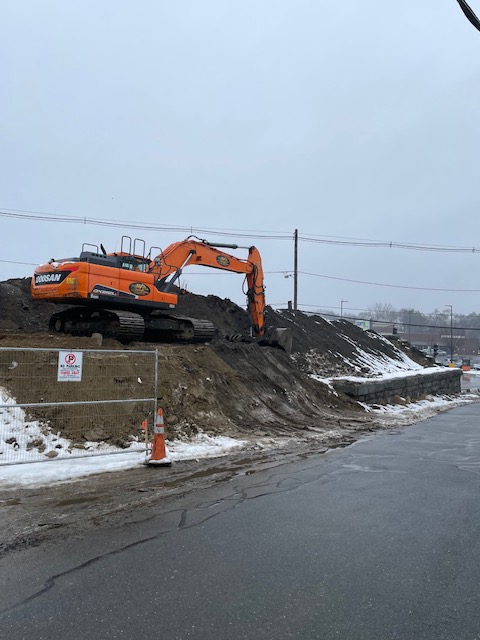

As I have watched this site transform from the remnants of urban transit infrastructure to single-family houses that are the biggest on the block, it has been hard not to find the project ironic given the controversy in the region over the MBTA Communities Act. The law requires municipalities that are served by the MBTA to have zoning for multifamily housing in order to help ease the region’s housing supply shortage. There has been much chaos surrounding the implementation, though, with some towns refusing to comply and suing the state over the law’s requirements, the Supreme Judicial Court upholding the law but saying the regulations surrounding implementation were unenforceable, and the Auditor determining that the requirement is an unfunded mandate. Obviously, I’m not suggesting that the station be reopened instead, but it would make more sense as a multi-unit structures. Being only a short walk from the current Commuter Rail station, directly next to a bus stop, and across the street from a grocery store, it is an ideal location for car-free living. Instead, the location is getting single-family houses with garages that are bigger than all the other houses on the block.
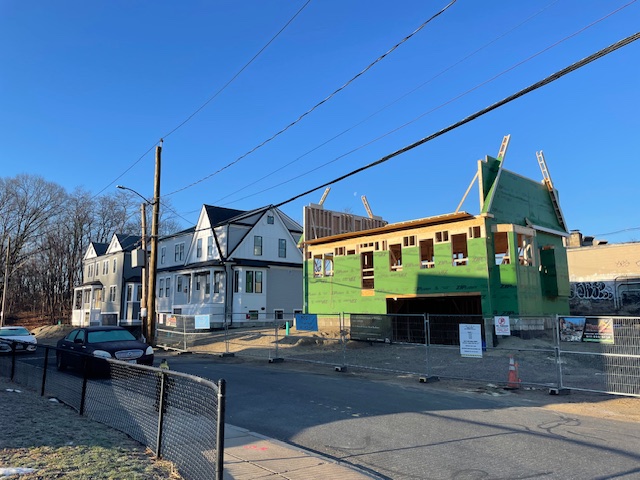


Seeing this project unfold over the last year-plus also makes me think about how quickly things change. This station was operational when my grandparents were kids, and in the course of their lifetime, it became lost and forgotten. I wonder what I take for granted in my neighborhood might be discovered by my grandchildren someday.


 Personal Website of Matthew K. MacNabb